
Inside Asia’s Data Centre Boom: Key Takeaways from Data Centre World Asia 2026
21 Oct, 20265 mins
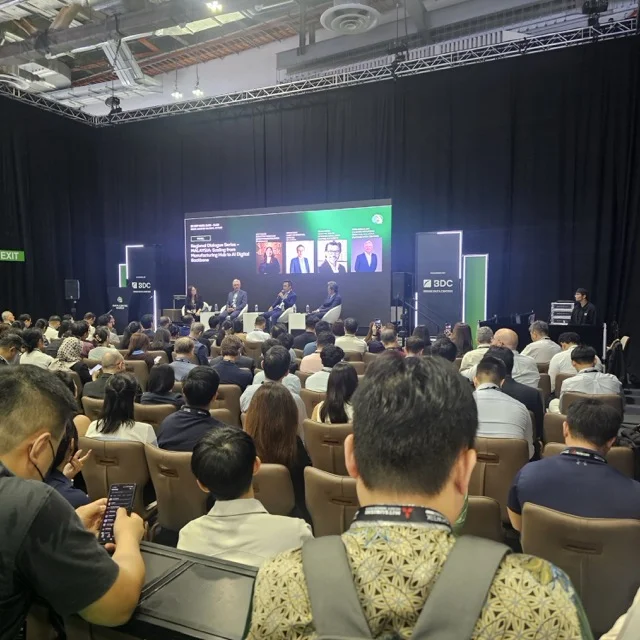
Asia's data centre industry is entering a period of rapid growth, driven by rising demand for artificial intelligence (AI), cloud computing and digital infrastructure. However, as investment accelerates, the industry faces growing challenges around power availability, construction timelines and supply chain capacity.
On 29–30 September, Chris Lamb, Regional Managing Director at First Point Group, attended Data Centre World Asia 2026 in Singapore, where industry leaders gathered to explore the technologies, opportunities and challenges shaping the next generation of data centres.
According to CBRE, data centre investment across Asia Pacific reached a record US$11.6 billion in 2025, with AI demand driving expansion into markets such as Malaysia, Australia and India.
Here are four key takeaways from the event and what they mean for the future of data centre development across the region.
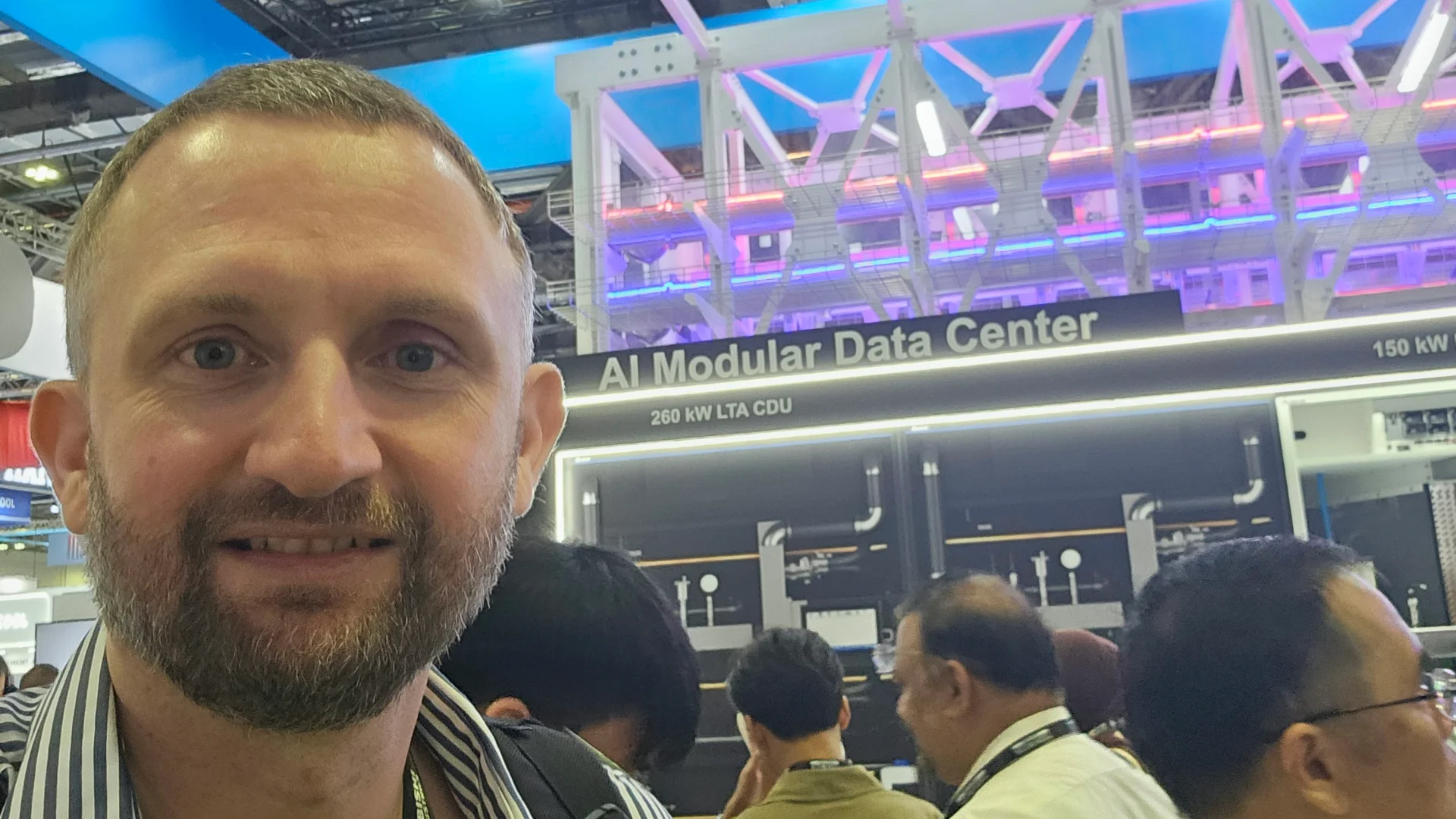 Chris Lamb at Data Centre World Asia 2026
1. AI Is Driving Unprecedented Demand for Data Centre Capacity
AI is fundamentally changing the scale and pace of data centre development across Asia.
One of the most striking trends highlighted at the event was the level of demand from hyperscale cloud providers, with some capacity being committed before facilities have even been constructed.
This reflects a wider shift in the market. According to JLL, Asia Pacific is expected to deliver 4.8 GW of new data centre supply by 2027, with 78% already preleased.
As hyperscalers and AI infrastructure providers compete to secure capacity, developers are under increasing pressure to accelerate construction and bring new facilities online.
However, the challenge is no longer simply about building more data centres. It is about delivering AI-ready infrastructure quickly enough to meet rapidly evolving demand.
2. Modular Data Centres Are Becoming Critical for Faster Delivery
Modular data centres are not new, but their role in the industry is becoming increasingly important.
With AI workloads evolving rapidly, traditional development timelines create a significant challenge: infrastructure designed today may no longer fully meet technical requirements by the time it becomes operational.
This is driving greater interest in modular and prefabricated solutions that can help developers shorten construction timelines, standardise components and scale capacity more efficiently.
Companies such as Schneider Electric, Delta and Infratrak are among the players developing solutions in this space.
For developers, speed and flexibility are becoming essential competitive advantages. The ability to adapt designs, integrate new cooling technologies and respond to changing power-density requirements will be critical as AI infrastructure continues to evolve.
3. Power Availability Is Becoming a Major Constraint on Growth
While demand for data centre capacity continues to accelerate, access to reliable power remains one of the industry's biggest challenges.
Across Asia, developers are facing increasingly complex grid connection requirements and extended waiting periods, particularly in high-growth markets.
Johor, Malaysia, was highlighted as an example of a market where rapid data centre development is creating pressure on power infrastructure and grid connections.
The challenge extends beyond Southeast Asia. JLL reports that grid connection waiting times across Asia Pacific can range from approximately two years in emerging markets to more than eight years in established markets.
As a result, power availability is increasingly influencing where new data centres are built, alongside factors such as land availability, connectivity and operating costs.
Developers are also exploring alternative power strategies and more energy-efficient infrastructure to support future growth.
4. Supply Chain Constraints Are Putting Delivery Timelines Under Pressure
The rapid expansion of data centre capacity is also placing significant pressure on global supply chains.
Long lead times for essential equipment, including generators, pumps and electrical infrastructure, can delay projects even after construction is well underway.
These challenges extend to the technology inside the facilities. Growing demand for AI computing infrastructure is creating intense competition for GPUs and other critical semiconductor components, including memory and power-management chips.
With companies competing for limited manufacturing and supplier capacity, securing equipment early has become increasingly important to project planning.
The challenge is not simply having sufficient investment or construction capacity. Developers must also ensure that critical components arrive when needed to bring facilities into operation.
The People Behind Asia's Data Centre Growth
These trends highlight an important reality: delivering new data centre capacity requires more than investment in land, power and technology. It also depends on having the right expertise at every stage of development.
As projects become larger, more technically complex and increasingly time-sensitive, demand for experienced professionals is likely to remain strong across several key areas:
Design & Build: Project managers, construction leaders and engineering specialists who can deliver complex facilities within tight timelines.
Power & Electrical: Engineers with expertise in electrical infrastructure, grid connections and power distribution.
Cooling & Mechanical: Specialists supporting advanced cooling systems and the growing requirements of high-density AI workloads.
Commissioning & Critical Facilities: Professionals responsible for ensuring new facilities are tested, operational and ready for handover.
Operations & Maintenance: Experienced teams capable of maintaining reliability, efficiency and performance once facilities go live.
For organisations expanding across Asia Pacific, workforce planning will be an essential part of successful project delivery.
Looking Ahead
Data Centre World Asia 2026 reinforced the scale of opportunity across the region, while highlighting the practical challenges that could shape its growth.
AI-driven demand is accelerating investment, but speed of delivery, access to power, supply chain resilience and technical expertise will increasingly determine which projects can move successfully from planning to operation.
At First Point Group, we work with data centre developers, operators, hyperscalers and infrastructure providers to connect businesses with specialist talent across the project lifecycle.
As Asia's data centre market continues to evolve, we remain focused on helping organisations build the teams needed to deliver the next generation of digital infrastructure.